
View Platform Forge — Seoul modernization desk
=== independent guidance ===IT Consulting Guidance for South Korea's Modernization Projects
Compare cloud, integration, and security options before you sign anything.
Choosing an IT consulting partner in South Korea is harder than it looks. The market mixes domestic systems integration giants, global consultancies, managed cloud providers, and young security specialists, and each one solves a different problem. View Platform Forge is an independent resource that helps mid-market and enterprise buyers in Seoul and across Korea compare those options before they sign anything. We do not sell licenses or take vendor commissions. We map your situation to the type of firm that actually fits it, whether that is a hybrid cloud migration, an ERP and CRM rollout, or a security review.
What you're actually choosing between
Korea's consulting market splits into a few recognizable groups. Domestic SI firms such as LG CNS handle large enterprise modernization programs end to end. Global brands like IBM Consulting bring enterprise technology depth and international delivery standards. Then there is a middle layer of managed cloud providers such as Cloud4C and OpsNow, and smaller security-focused shops such as Kairos, founded in Seoul in 2019. Knowing which group your project belongs to is the first decision, and it is the one most buyers rush.
A helpful way to sort them: systems integration SI work in Korea fits heavily customized estates, managed services fit lean teams that need daily operation, and focused security firms fit bounded reviews and web projects. The guides on this site follow that split so you can start in the right lane.
Service ledger — where each lane fits
Cloud migration consulting in Seoul
Hybrid cloud moves with rollback points and phased cutover while the business keeps running. Full detail lives in the migration guide.
Open guideCybersecurity consulting
Identity, access control, and network segmentation decided early, with cloud architecture and threat model designed together.
Open guideDigital transformation and AI-readiness
Data cleanup, documented processes, and systems that expose the right information before any model work starts.
Open guideHow we evaluate vendors
Comparable projects, change-request pricing, runbook ownership, and knowledge transfer — checked the same way each time.
Open method
Running move
Cloud migration without stopping the business
Most Korean mid-market companies are not moving to the cloud from scratch. They are moving a legacy ERP, a data warehouse, or an aging on-premise stack while the business keeps running. That changes what you should ask a vendor.
A migration plan needs rollback points, a phased cutover schedule, and a clear answer for what stays on-premise. Hybrid cloud is the norm here, not the exception. Settle data residency, latency for shop-floor or branch systems, and who watches the cutover window before dates are fixed.
Night review — cutover window and rollback list
Connected estates
Systems integration when off-the-shelf won't fit
Systems integration work is where Korean buyers often get surprised by scope. Connecting a CRM to an existing ERP, wiring payment systems, or unifying data across departments usually means custom middleware and months of testing.
SI-heavy firms like LG CNS and cross-border teams such as Algesoft, with offices in Istanbul and Seoul, approach this differently, and the fit depends on whether your systems are standard or heavily customized. Ask for an interface list, a test plan with real data volumes, and who owns each connector after launch.

Early decision
Cybersecurity belongs in the first planning meeting
Security is not a phase you add at the end. In cloud projects, identity management, access control, and network segmentation decisions get made early and are expensive to reverse.
KINX, an infrastructure firm founded in Seoul in 2000, is one example of a provider whose cloud and cybersecurity services sit close together, which matters when your architecture and your threat model need to be designed at the same time. Bring your access rules and logging needs to the first workshop, not the last review.
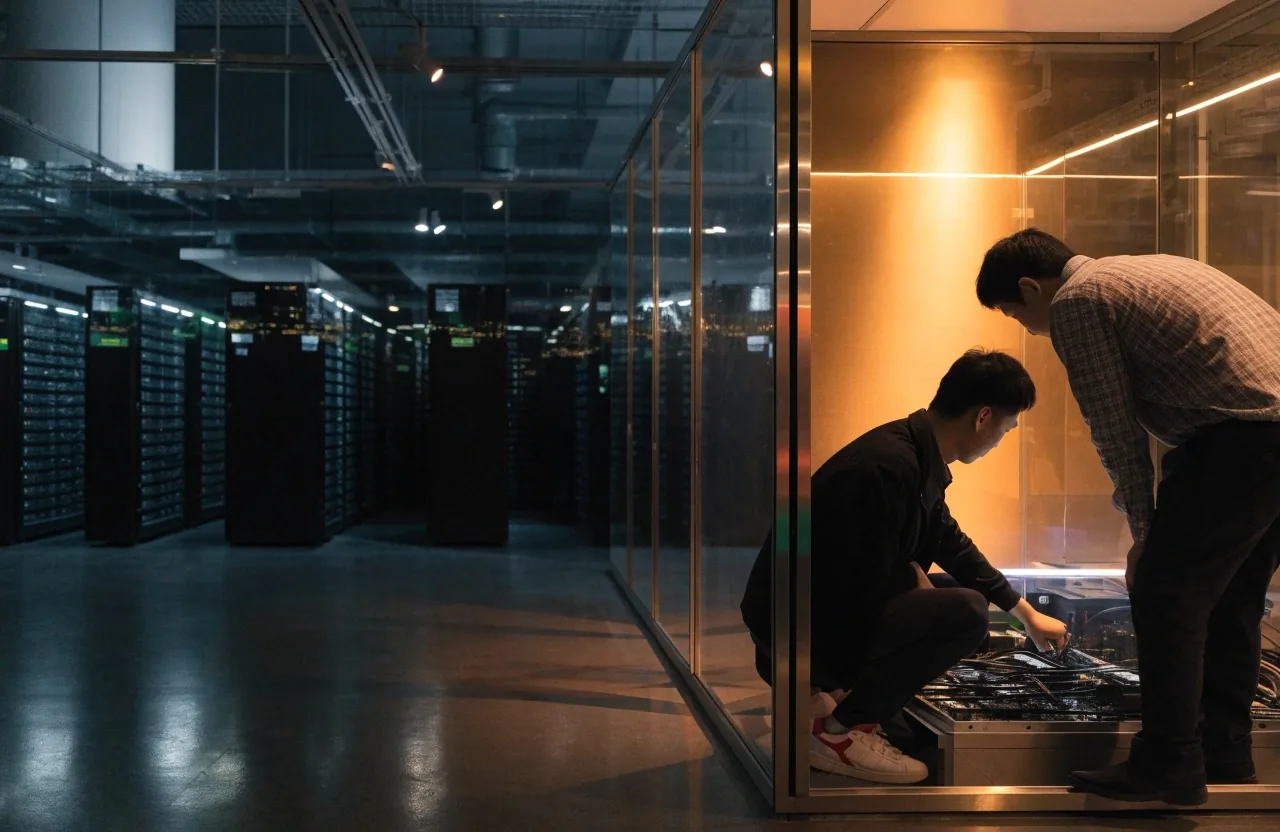
Corridor check — access and segmentation
Managed services versus one-time consulting
A consulting engagement ends. Managed services do not. If your internal IT team is small, a managed provider that runs your cloud environment day to day may be more useful than a strategy deck. Cloud4C, established in 2014 and active in Seoul, is listed among providers offering both cloud consulting and managed services.
The question to settle early: do you need advice, or do you need someone to operate the system after the advice is delivered? Put monitoring, patching, backup restores, and cost reviews in writing so the handoff is clear. For a 40-person manufacturer in Gyeonggi-do the answer often differs from a listed enterprise — match the partner's typical project size to yours and ask what their smallest and largest engagements look like.
Cloud bills have a habit of growing faster than usage. FinOps-style cost work of the kind OpsNow is known for looks at right-sizing instances, storage tiers, and idle resources before anyone talks about renegotiating contracts. For mid-market firms that review is often the fastest place to find budget for the next phase.
Operator console — real contact rows
- Office
- 16 microdistrict 3 160005 Shymkent Kazakhstan
- Phone
- (943) 305-2686
- [email protected]
- Hours
- Mon–Fri: 09:00–18:00
Young firms like Kairos, with a small team serving clients from small companies to large ones, can move quickly on focused security or web projects. Large SI providers bring process and scale but also overhead.
Send a consulting inquiryBudget lane
Where AI-readiness fits into the budget
AI-readiness is showing up in Korean boardroom conversations, but it usually starts with unglamorous work: clean data, documented processes, and systems that can expose the right information.
SAP Korea's October 2026 program offering free diagnostics to 100 mid-sized firms, including digital transformation roadmap consulting and AI-readiness assessment, is a signal of where enterprise software vendors see demand. Treat AI-readiness as a data and process project first, then decide what to pilot.
Read the transformation guideLong view
What "long-term value" means in practice
Consulting value shows up years later, in systems that are still maintainable and documentation that still makes sense. That favors partners who hand over clean architecture and trained internal staff over those who create dependency.
If a proposal does not mention knowledge transfer, treat that as a gap, not an oversight. Ask for admin guides written for your team, recorded handover sessions, and a named owner for the runbook after go-live.

Late shift — systems that stay maintainable
Checklist
Questions to ask before signing
-
Ask for the last three projects most similar to yours, including what went wrong.
-
Ask who owns the runbook after go-live and how handover is staffed.
-
Ask how change requests are priced and what counts as out of scope.
-
Ask whether the security review is done by the same team that builds the system.
The answers reveal more than a capabilities presentation ever will. Write them into the statement of work so the project has a record to return to.
How this site is organized
Each guide on this site covers one decision area: cloud migration, cybersecurity, digital transformation and AI-readiness, and how we evaluate vendors. There are no rankings for sale and no sponsored placements. If you want help framing your own shortlist, the contact page explains what to send.
Planning a first step
Start with a written description of your current environment, your constraints, and a realistic timeline. That document is worth more than any vendor comparison.
It also makes it much easier to tell which consulting firms are listening and which are pitching a template. Bring that note to the contact page and we will help you frame a shortlist.
Send a consulting inquiryCommon questions from Korea-based buyers
What kind of IT consulting firm is best for cloud migration in South Korea?
It depends on whether you need strategy, migration execution, or ongoing operations. Managed providers suit companies without a large internal cloud team; SI firms suit complex custom environments.
How do Korean enterprise IT consultancies differ from global firms?
Domestic firms like LG CNS bring local delivery and large-scale SI experience. Global brands like IBM Consulting bring international standards and enterprise technology depth. Many projects benefit from both.
What should a mid-sized company ask before starting digital transformation consulting?
Ask for comparable past projects, how change requests are priced, and what knowledge transfer is included. A proposal without those details is incomplete.