
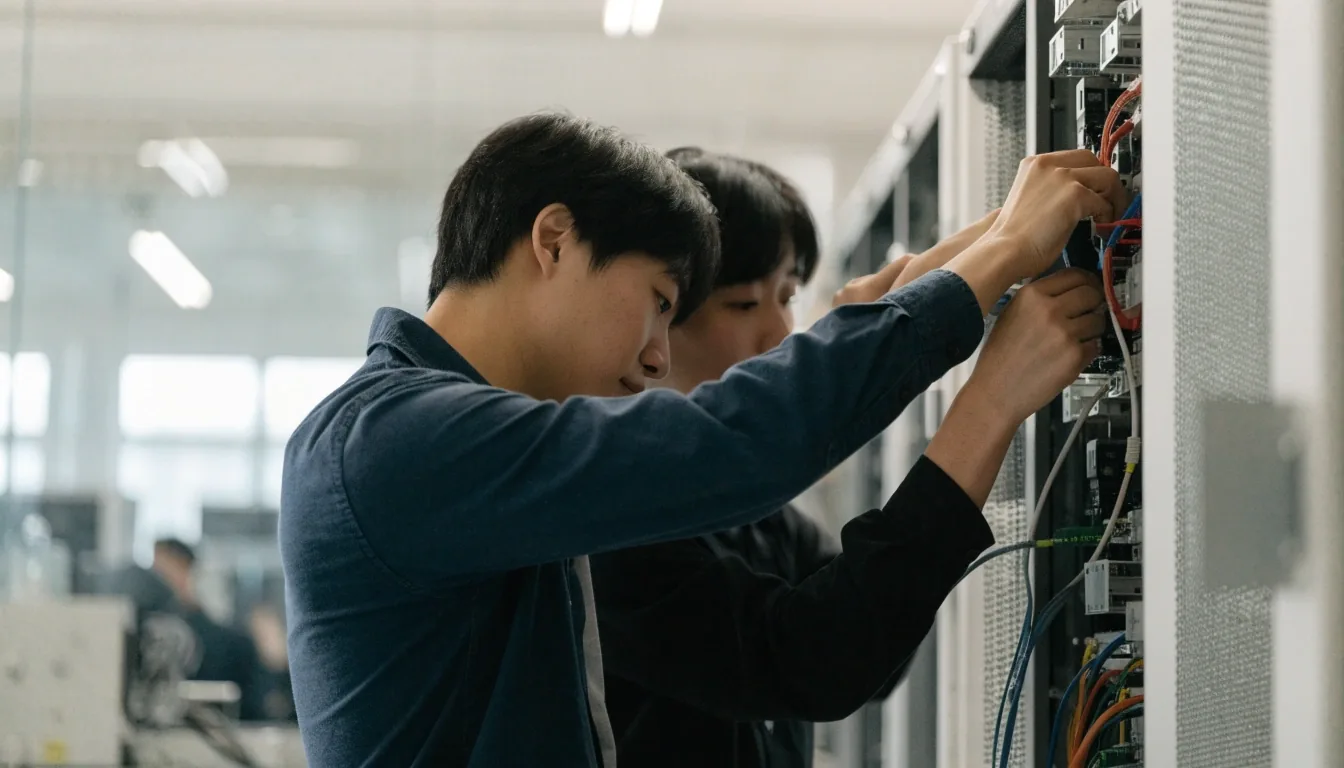
Digital Transformation and AI-Readiness in Korean Enterprises
Scope ERP, CRM and AI work by business value, not by software brochure.
Start with the process, not the platform
Digital transformation in Korea usually starts with a business problem, not a technology. A reporting bottleneck, a slow order process, or a CRM nobody uses. This guide covers how to scope ERP, CRM, and AI-readiness work into a phased roadmap that survives contact with a real budget cycle.
Before choosing software, document the process you are changing: who does what, where it stalls, and what a good outcome looks like. Korean mid-market companies that skip this step end up customizing an ERP to match a broken workflow. The documentation is unglamorous and it is the highest-value part of the project. Walk the floor, time the handoffs, and write down the exceptions people handle from memory. That page becomes your scope, your test script, and your training outline.
Map
Roles, handoffs and waiting time for one process.
Define
What good looks like in days saved or errors avoided.
Freeze
No customization until the fixed process is agreed.
If you take one idea from this page, take this: a clear process sheet makes every later decision about ERP integration consulting and CRM integration in Korea cheaper and faster.
Where the work lands
Two systems, one adoption problem
ERP integration realities
ERP work in Korea is rarely greenfield. It is integration with existing finance, manufacturing, or logistics systems. That means middleware, data mapping, and testing cycles. SI-heavy firms handle this well because it is their core work. Ask any consultant how they handle data migration from your specific legacy system — which tables, which codes, who signs off on the mapping, and how many test loads are included.
Data mapping includedCRM integration and adoption
A CRM that sales does not use is a cost, not a transformation. Integration with email, phone systems, and existing customer databases matters, but adoption matters more. Plan training and a pilot group before a company-wide rollout. Pick one team, clean their pipeline data with them, and connect the calls and inbox they already live in. If the pilot team keeps using it after week four without reminders, you have something to scale.
Pilot firstThe role of systems integration partners
Large domestic firms like LG CNS handle complex, multi-system modernization programs for enterprises. Global consultancies like IBM Consulting bring enterprise technology depth and international delivery experience. For mid-market companies, the practical question is whether your project is complex enough to need that scale. A single-site ERP module or CRM rollout often fits a focused local team; a multi-plant, multi-entity program with finance, logistics and factory systems does not.
Match scale to scope
What AI-readiness actually requires
AI-readiness is mostly a data and process question. Do you have clean, documented data? Can systems expose it through APIs? Are processes stable enough to automate?
SAP Korea's October 2026 announcement of free diagnostics for 100 mid-sized firms, including digital transformation roadmap consulting and AI-readiness assessment, reflects how vendors are packaging this. The underlying work is the same regardless of vendor: check data quality, confirm systems can share data, confirm the process is stable, and confirm someone owns the rules for access and review. An AI-readiness assessment reviews those four points. It is not an AI implementation.
Data quality · System access · Stable process · Clear ownership
Cloud migration consulting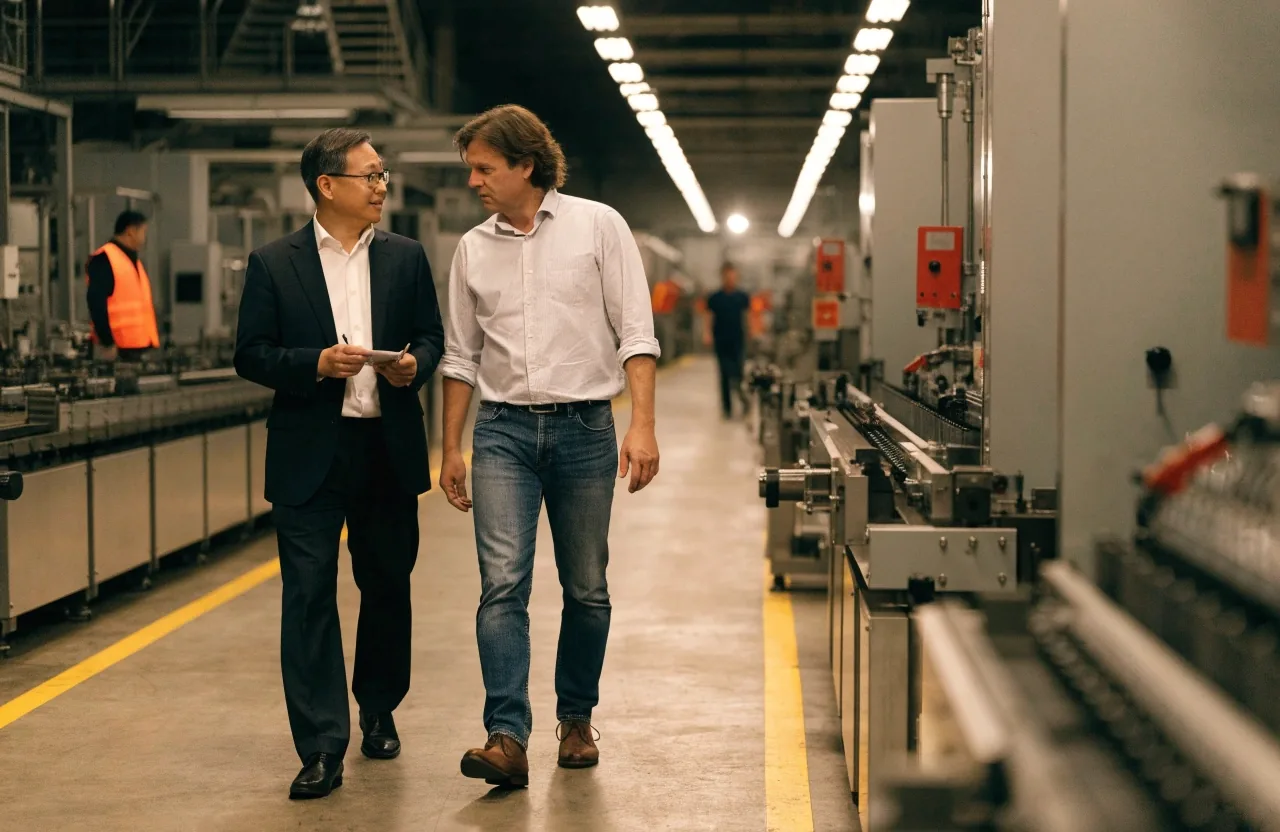
Phasing the roadmap
A transformation roadmap should be phased by business value, not by technology layer. Phase one might be data cleanup and one process fix. Phase two might be an ERP module.
Trying to do everything at once is the most common failure pattern in Korean mid-market projects. An enterprise modernization roadmap that earns its next budget looks like this: first, fix one painful flow and clean its data; next, connect the systems that touch that flow; then extend to the adjacent module. Each phase ships something the finance team can point to. For mid-sized business digitalization, three short phases beat one long program.
- Phase one — one process, clean dataStands alone
- Phase two — connect and extendOne module
- Phase three — scale what stuckAdoption led
Operator console — money and proof
Budgeting across cycles
Transformation work spans budget years. That means each phase needs to stand on its own value, not just contribute to a distant end state. Korean finance teams are right to ask what phase one delivers.
Write the one-line return for each phase before you approve it: fewer days to close, fewer manual re-entries, fewer lost follow-ups. If a phase cannot carry its own line, split it smaller or move it later.
Measuring progress
Define a small number of measures before you start: process cycle time, data quality, adoption rate. Avoid vanity metrics. If the measure does not change a decision, it is not worth tracking. Review them with the process owner monthly, not in a steering deck quarterly.
Common failure patterns
Scope creep, unclear ownership, and treating the software vendor as the transformation lead. Each of these shows up repeatedly. Naming them early makes them easier to catch: lock scope per phase, name one owner per process, and keep the vendor responsible for the system while your team owns the change.
Track
Cycle time per process
Track
Data errors per month
Track
Weekly active users

Night view from the project room — the work continues across budget years.
A practical first step
Pick one process, document it, and run a small pilot. It is the cheapest way to learn how your organization actually responds to change.
Choose the process people complain about most, keep the pilot team under ten people, and give it six weeks with a clear end date. You will learn more about digital transformation in Korea from that pilot than from three months of vendor demos.
Operator queries
Questions we hear from buyers
Should we do ERP or CRM first?
Whichever addresses the most painful current process. Sequencing by business value beats sequencing by technology. If orders stall in fulfillment, start with ERP. If follow-ups fall through, start with CRM.
What does AI-readiness assessment include?
Typically data quality, system integration, process stability, and governance. It is an assessment of readiness, not an AI implementation. Expect a findings sheet with gaps ranked by effort, not a model.
Do mid-sized Korean companies need a global consultancy?
Not always. Domestic SI firms and mid-size consultancies often fit mid-market budgets and timelines better. Match scale to project scope, and ask every bidder for a phased plan you can stop after phase one.

Bring one process. Leave with a phased plan.
Write to View Platform Forge with the process that hurts most. We will help you turn it into a roadmap your finance team can approve one phase at a time.
Email: [email protected] · Phone: (943) 305-2686
Mon–Fri: 09:00–18:00 · 16 microdistrict 3 160005 Shymkent Kazakhstan
Visit the project room
Our desk supports South Korea buyers from Shymkent. The map below shows the office address for correspondence and scheduled meetings.
16 microdistrict 3 160005 Shymkent Kazakhstan